

Sludge Dewatering System Improvement in Bengbu
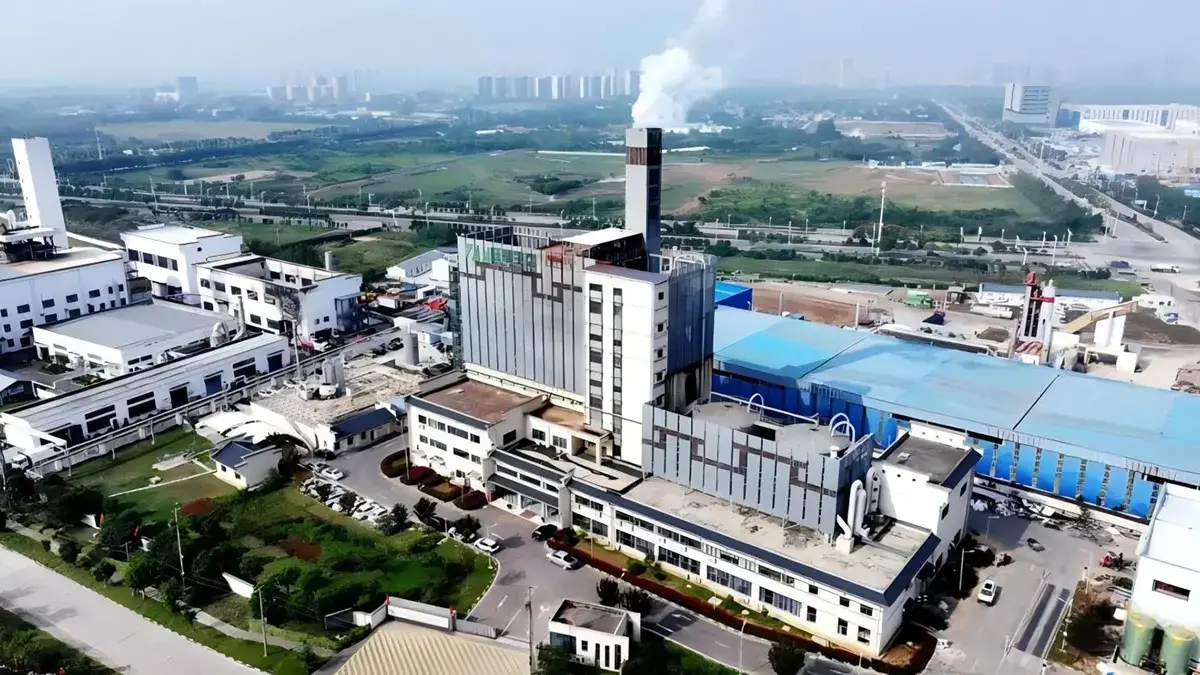
Phase I of the sludge treatment and disposal project adopted an integrated process consisting of sludge receiving and weighing, sludge spray drying, rotary kiln incineration, flue gas treatment, wastewater treatment, and automated control. After drying, the sludge was fed into a rotary kiln for incineration. The project was commissioned and put into operation in May 2021.
The first phase of the Bengbu sludge treatment project used spray drying followed by rotary kiln incineration to process municipal sludge with a moisture content of 80%–85%.
Once the drying-and-incineration process was put into operation, the project faced three main problems:
-
High Operating Costs
The sludge contained 80–85% moisture, meaning that a large amount of heat was required to evaporate the water during incineration. The heat generated by combustion of the organic matter in the sludge was insufficient to meet this demand, resulting in a substantial net energy deficit. Natural gas therefore had to be used as auxiliary fuel to maintain the required kiln temperature. Fuel consumption became a major operating expense, causing project operating costs to exceed expectations and resulting in loss-making operation.
-
Heavy Flue Gas Treatment Load and Odor Issues
Drying the high-moisture sludge generated a large volume of water vapor, significantly increasing the volume of gas requiring treatment. This placed a heavy load on the flue gas desulfurization, NOx removal, particulate removal, and mist elimination systems. The increased gas volume also required greater downstream cooling and purification capacity and increased operating energy consumption.
Organic substances released with the exhaust gas also contributed to odor problems, affecting the surrounding area and nearby residents. -
Insufficient Treatment Capacity
Due to the high energy demand and excessive flue gas treatment load, the treatment capacity remained well below the system's designed capacity.
-
High‑Pressure Deep Dewatering Retrofit
Kuangyuan upgraded the existing sludge treatment process by adding high‑pressure deep dewatering ahead of the drying and incineration stages. The system reduces sludge moisture from approximately 80–85% to 45–50% in a single dewatering stage, removing more water before the sludge enters downstream thermal treatment.
With less water left to evaporate, the retrofit reduces the treatment load and associated costs of the downstream process while also helping reduce the burden of odor control.
-
System Design and Layout
The sludge dewatering line was designed for a treatment capacity of 350 t/day, with an average inlet moisture content of 80% ± 5% and an average outlet moisture content of 48% ± 1%. It is designed to operate 24 hours per day for at least 330 days per year.
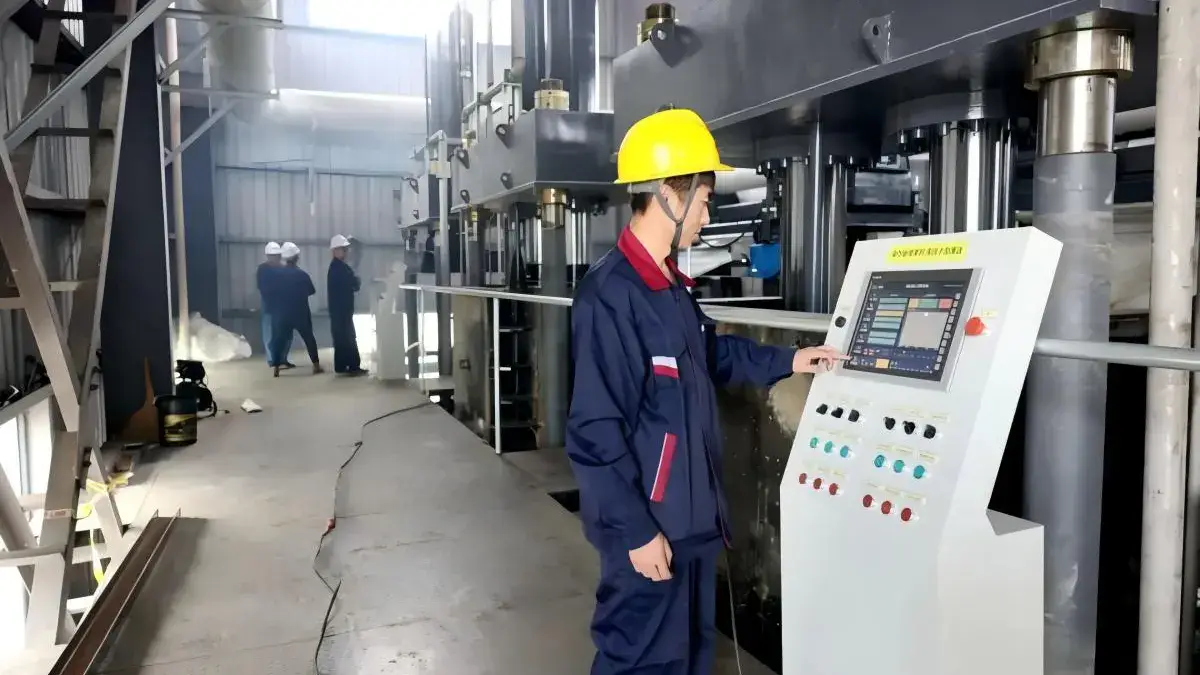
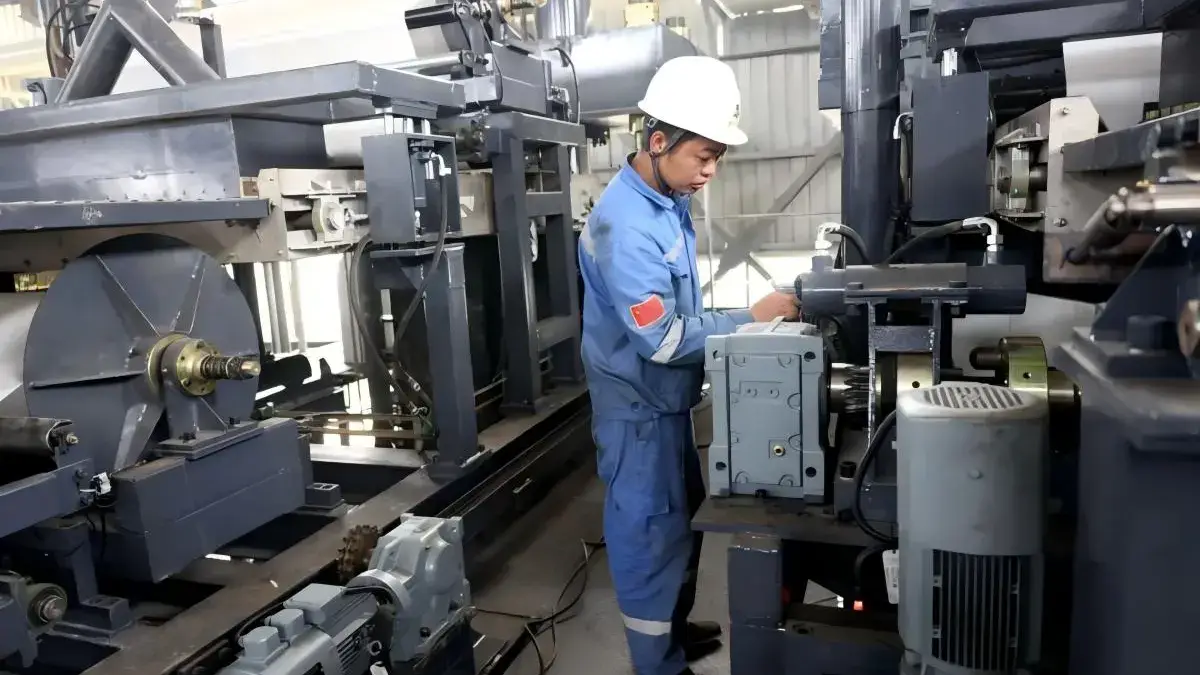
Seven dewatering units were installed within the designated 29 m × 21.6 m × 10 m project area. After dewatering, the sludge is transferred to a sludge cake storage bin and then transported off-site for incineration.
We added high-pressure deep dewatering before the existing drying and incineration stages, lowering sludge moisture before it enters the rotary kiln and reducing the evaporation load during incineration.
-
-
Exhaust Gas Condensation and Deodorization
To further control odors, the system also incorporates an exhaust gas condenser and deodorization system to treat the exhaust gas generated during operation and reduce odors before discharge.
-
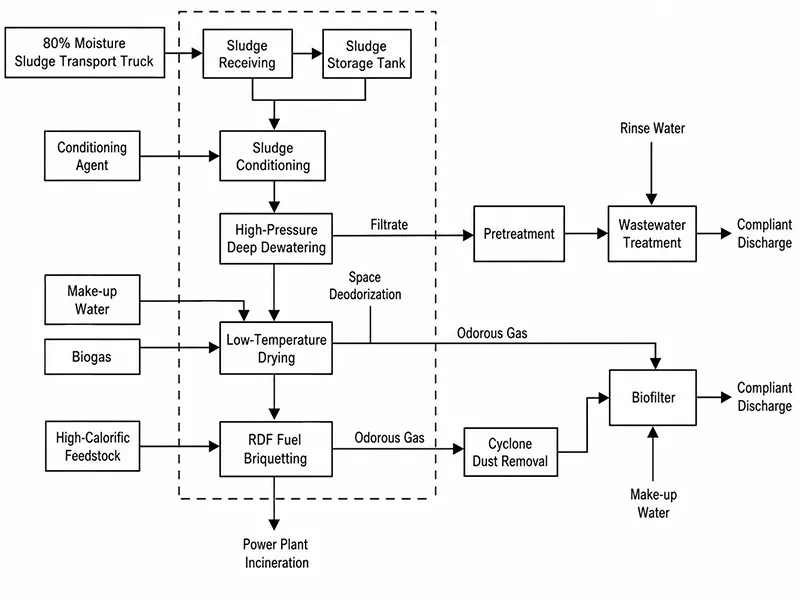
Sludge Receiving and Storage
Incoming sludge trucks are first weighed on the plant weighbridge before entering the sludge receiving area. The system includes two receiving hoppers, each with a capacity of 100 m³. From the hoppers, the sludge is pumped into two 1,500 m³ storage tanks for temporary storage before transferred to the conditioning system.
-
Sludge Conditioning
Stored sludge is transferred into the conditioning system, where a dewatering chemical is added by dosing pump and thoroughly mixed with the sludge. This chemical conditioning improves sludge dewatering performance and prepares it for the subsequent pressure dewatering process.
-
High-Pressure Deep Dewatering
After conditioning, the sludge is fed into the high-pressure deep dewatering system for soli-liquid separation. This mechanical dewatering stage reduces the amount of moisture that must be handled by the downstream drying process.
-
Low-Temperature Drying
Once the dewatering cycle is complete, the dewatered sludge is conveyed by belt conveyor to the No. 1 storage hopper and then fed into the low-temperature drying system. The dried sludge is collected in the No. 2 storage hopper before being transported off-site for further disposal.
-
Odor and Filtrate Treatment
Odorous air generated by the system is directed to the plant's odor control system for treatment before discharge.
Filtrate from the dewatering process is first conveyed by pipeline to the wastewater sedimentation tank and then transferred to the plant wastewater treatment system. After meeting the required sewer discharge standard, the treated water is discharged to the municipal sewer network.
-
Odor Control
TAir from enclosed process areas is extracted under negative pressure and routed to the plant’s centralized air treatment system. After treatment, it is discharged in accordance with the required emission standards.
-
Filtrate Treatment
Filtrate from the dewatering process is treated at the plant’s wastewater treatment station before being discharged to the municipal sewer network. The treatment station has a design capacity of 300 m³/day and uses a two-stage A/O process, air stripping, and membrane bioreactor (MBR) treatment. The treated wastewater must meet the influent water quality requirements of Bengbu No. 2 Wastewater Treatment Plant before discharge to the municipal sewer network.
| Parameter | Specification |
| Treatment capacity | 350t/d |
| Average inlet sludge moisture | 80%±5% |
| Average outlet sludge moisture | 48%±1% |
| Dewatering units number | 7 |
| Operating time | 24h/day |
| Annual operating days | ≥330days/year |
| Conditioning chemical | Polyferric solution; no lime or other dry solids added |
| Conditioning chemical dosage | ≤25, based on dry sludge mass |
| Average Rinse Water Consumption | ≤0t/day |
-
Lower Energy Consumption and Fuel Costs
Mechanical dewatering reduces sludge moisture from approximately 80% to 50%, leaving significantly less water to be removed during downstream thermal treatment. After the high‑pressure deep dewatering system is introduced, the lower evaporation demand reduces fuel consumption and operating costs, helping improve project profitability.
-
Better Use of Steam Generated from Waste Heat
The existing boiler section between the secondary combustion chamber and spray dryer produces approximately 2.4 t/h of steam at 160°C. Around 30 t/day had previously been vented, resulting in wasted thermal energy and additional fuel consumption.
The project therefore targets more effective use of this available steam rather than allowing usable thermal energy to be released unused.
-
Higher Sludge Treatment Capacity
By improving the efficiency of the dewatering stage, the high‑pressure deep dewatering system helps the existing facility handle higher sludge volumes and meet continuous treatment requirements. The upgraded system has a design treatment capacity of 350 t/day.
-
Lower Exhaust Gas Volume and Improved Incineration Efficiency
Before the upgrade, the moisture content of the spray‑dried sludge remained above the rotary kiln’s 20% design inlet moisture level. This increased the kiln load and contributed to incomplete combustion and higher energy consumption.
With high‑pressure deep dewatering added upstream, the downstream spray‑drying stage can reduce sludge moisture to approximately 20% under the same treatment capacity. This reduces the amount of water that must be evaporated during spray drying, lowers the volume of exhaust gas generated, improves sludge incineration efficiency, and reduces odor concentration in the exhaust gas, helping improve the plant environment.