

Municipal Sludge Dewatering Project in Guangzhou
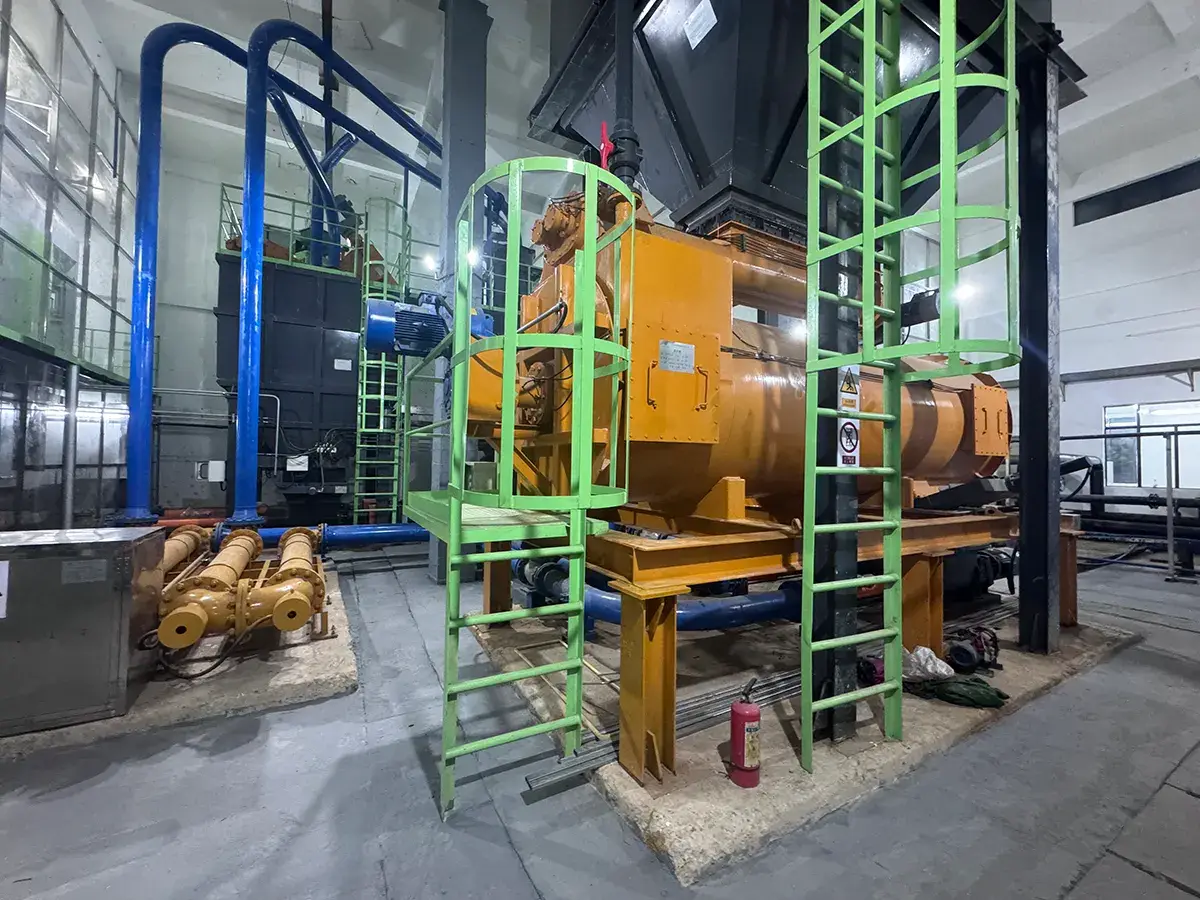
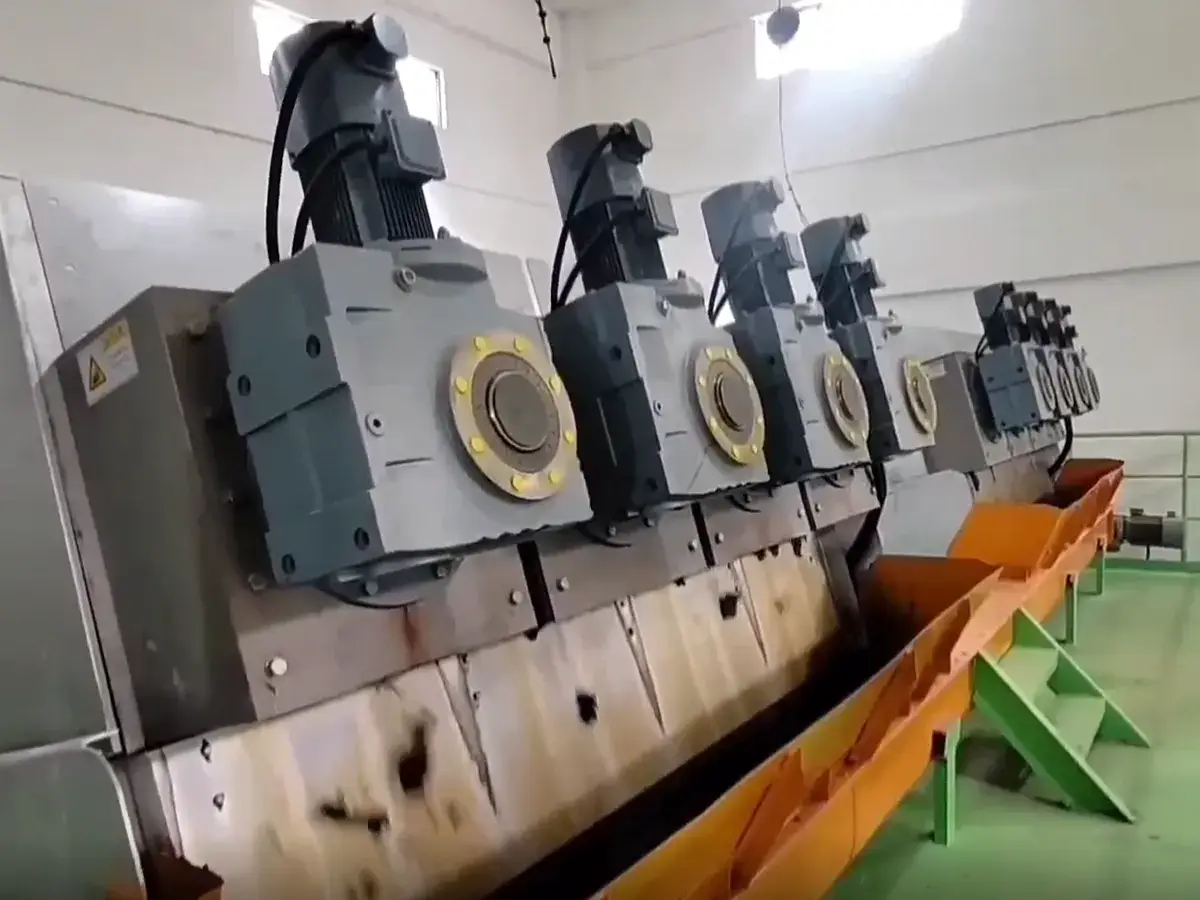
- Application: Municipal Sludge Dewatering
- Treatment Capacity: 100t/day
- Deep Dewatering Feed Moisture Content: Approx. 80%
- Dewatered Sludge Moisture Content: 30-40%
- Core Process: Sludge thickening tank → multi-disc screw press dewatering → chemical conditioning (no dilution required) → electrochemical treatment → high-pressure stack press dewatering
- Installation Footprint: Approx. 300 m² Project Delivery Period: Design, equipment installation, and commissioning completed within 60 days of contract signing
This municipal sludge dewatering project combines existing plant equipment with a newly installed high-pressure stack press dewatering system to achieve deeper mechanical dewatering before final sludge disposal.
Sludge at approximately 80% moisture is transferred by the buffer pumping system to the conditioning tank, followed by electrochemical treatment and high-pressure stack press dewatering. The process reduces the sludge moisture content to 30–40%. The dewatered sludge is then conveyed to a dry sludge storage silo before being transported off-site for final disposal.
-
The system does not rely on mechanical pressure alone. Instead, it combines chemical conditioning, electrochemical treatment, and high-pressure mechanical pressing to improve the sludge’s dewatering characteristics.
-
Chemical conditioning and electrochemical treatment disrupt water-retaining structures in the sludge, including gel-like flocs and cell walls or membranes. This allows part of the bound water to become more readily removable by mechanical separation.
-
The conditioned sludge then undergoes high-pressure stack pressing for further solid-liquid separation, reducing moisture from approximately 80% to 30–40%. Removing more water mechanically reduces the amount of moisture that would otherwise need to be evaporated during downstream thermal treatment, while also reducing sludge volume and the load on subsequent disposal.
The Guangzhou project is centered on high-pressure stack press dewatering, supported by upstream conditioning and electrochemical treatment as well as downstream sludge conveying, storage, and odor control. Sensors, automatic actuators, and a central control system are used to coordinate equipment operation throughout the treatment process.
The system includes:
- Multi-Disc Screw Press Dewatering System
- Conditioning and Mixing System
- Electrochemical Treatment System
- High-Pressure Stack Press Dewatering System
- Dewatered Sludge Conveying and Storage System
- Odor Control System
- Electrical Control System
- Auxiliary Systems
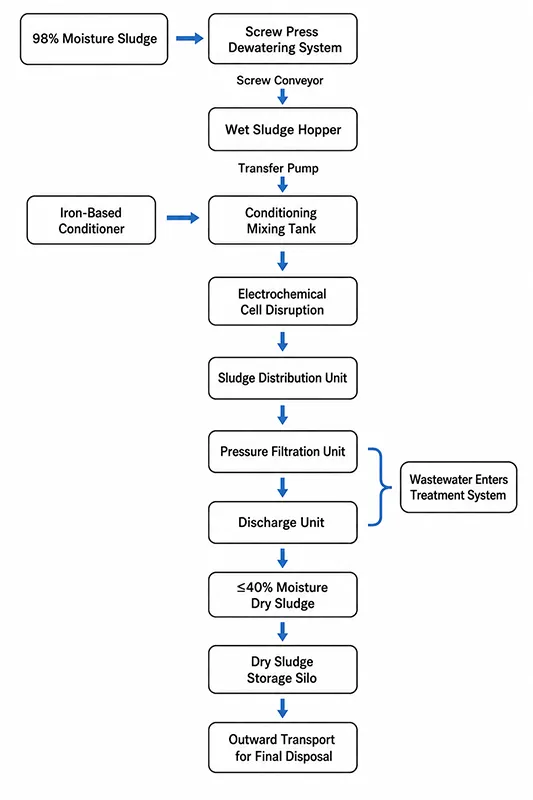
The Guangzhou sludge dewatering project treats wet sludge that has already undergone dewatering at a wastewater treatment plant. At this stage, the sludge typically still has a moisture content of 75–85%, contains a moderate level of biodegradable organic matter, and has poor dewatering performance. Additionally, odor generation is another challenge that needs to be addressed during sludge treatment.
- Lower-Carbon Sludge Treatment: Since the sludge is treated at normal temperature, no thermal drying is required. The energy use and odor emissions are reduced from the source, while iron-based conditioning replaces traditional lime dosing to help avoid secondary heavy metal pollution and meet ESG and dual-carbon requirements.
- Higher Dewatering Efficiency: Mechanical pressure filtration brings the final sludge moisture content down to ≤40%, while traditional plate-and-frame filter presses usually discharge sludge at around 60% moisture. With deeper dewatering, sludge volume is reduced by 3–5 times, and the compact layout requires only 3–5 m² per ton of sludge.
- Lower Operation and Maintenance Costs: The sludge dewatering process can be monitored daily through the PC and APP system, which reduces the need for constant on-site supervision. With no complex pretreatment steps, the dewatering line is easier to manage and requires less routine maintenance.
- The project’s deep dewatering process combines chemical conditioning, electrochemical treatment, and high-pressure mechanical pressing. Rather than relying on pressing pressure alone, the conditioning and electrochemical stages improve the sludge’s dewatering characteristics before the final pressing stage.
- Following conditioning and electrochemical treatment, water-retaining structures within the sludge are disrupted, including sludge flocs and cell walls or membranes. This helps release bound water into a more readily separable free-water form, allowing more moisture to be removed mechanically.
- The treated sludge then undergoes high-pressure stack pressing for further solid-liquid separation. In this project, sludge with a moisture content of approximately 80% can be reduced to an average of below 40%.
- By removing more water mechanically rather than relying on thermal evaporation, the process helps reduce dewatering energy demand and sludge treatment costs, while also reducing sludge volume and supporting sludge stabilization. The process also helps reduce odor generation.